


Today, just like in the 1920s, the US revolutionary movement grapples with the important question: what is the status of Black people in the United States, and what tasks are revolutionaries facing?
Some, like the modern revisionist CPUSA, argue that the Black nation either has never existed or has dissolved, due to one reason or another; that the only thing left to do is simply fight “racism” with no other fundamental tasks relating to the defense and development of Black national culture or economy, denying their right to self-determination. Others, influenced by a particular understanding of Pan-Africanism, abandon the Marxist definition of nation, and instead argue for a singular nation in both Africa and the African diasporas, subjecting revolutionary work among Black people under the banner of African revolution.
Amilcar Cabral, leader of the Bissau Guinean revolution, once famously said, “tell no lies. Expose lies whenever they are told. Mask no difficulties, mistakes, failures. Claim no easy victories.” The discussion on the Black national question is not an empty intellectual pursuit. Instead, it must be situated in the concrete conditions of the present, without telling lies and claiming easy victories. While there undeniably exists, admirable work done here or there, in this sector or that area, neither of these approaches have been able to forge a united, class-conscious, and stable movement with a mass character among Black people in the United States for the past few decades.
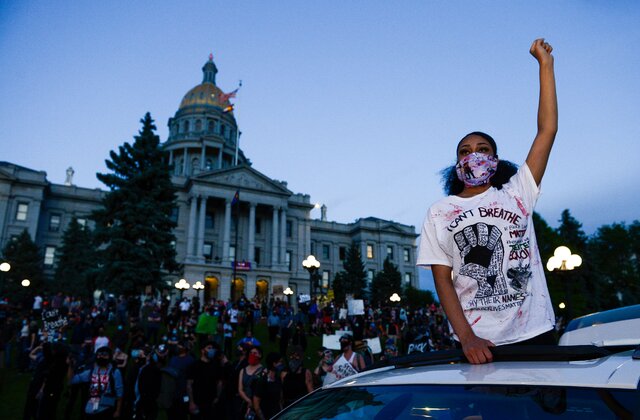
Meanwhile, the militancy, explosivity and anger of the Black masses in the US has swept across the country in waves of popular uprisings, each wave larger and more intense than the last. From the 1992 LA uprisings to the George Floyd uprisings, the Black masses’ spirit and experience has continued to grow exponentially in the soil of national oppression and exploitation. Despite this, what we continue to witness is the continuous isolation of the revolutionary movement from the broad masses of Black workers, as it fails to truly address their concrete demands with the right to self-determination at its center.
Without revolutionary theory, there cannot be a revolutionary movement. For too long, revolutionaries in this country have faced a general philosophical poverty alongside their poverty in revolutionary practice, leading to vicious cycles of subjectivism and revisionism and reducing concrete life-and-death questions to a matter of empty debate. The history of the Black nation and its struggle for freedom must be seen as a part of the history of the international proletariat and all oppressed nations in the world. To paraphrase Cabral, we must “return to the source;” back to what was produced by the height of revolutionary struggle both internationally and at home, without neglecting either. Especially, we must see ourselves as a part of the same historical process of the World Proletarian Revolution, which had its height in the universal contributions of Marx, Engels, Lenin, Stalin, Mao, and Gonzalo.
With that being said, the importance to revisit and study the 1928 and 1930 Resolutions on the Negro Question by the Communist International cannot be understated. These resolutions did not come from a place of empty intellectual debate but were produced by the most advanced social practice to shape the world at the time: those who were building the first socialist State in human history, alongside revolutionaries who led mass anti-imperialist and anti-capitalist struggles in both old Europe and Third World countries. Similarly, it was in light of these resolutions and under the guidance of the Comintern that the Communist Party reached its highest peak, organizing millions of Black sharecroppers, proletarians, semi-proletarians and urban poor in a militant, class-conscious movement able to challenge US imperialism.
What is self-determination? Lenin famously explained: “The right of nations to self-determination means only the right to independence in a political sense, the right to free, political secession from the oppressing nation. Concretely, this political, democratic demand implies complete freedom to carry on agitation in favour of secession, and freedom to settle the question of secession by means of a referendum of the nation that desires to secede.” To say that the Black nation has a right to self-determination implies something very clear-cut and simple: the Black nation, as an oppressed nation, has the right to secede its national territory: in the Black Belt of Alabama, Georgia, Louisiana, Mississippi, and South Carolina. Without this right, to speak of any form of liberation from national oppression is useless, and there can never be trust and unity between the workers of the oppressed nation and the oppressor nation. The right of self-determination is a democratic demand: it is a demand that concerns the entire nation. At the same time, it is part of the socialist revolution: it must be a struggle led by the Black working class, as the Black nation finds itself a part of the capitalist relation of production with the working class being the overwhelming majority. Like Lenin taught, the socialist revolution is not a single action or a single fight; it is an entire historical period of class conflict that resolves democratic as well as socialist questions of the masses through expropriation of the bourgeoisie.
The right to self-determination is fundamentally different from the slogan of “racial equality” or other slogans proposed today by a variety of groups. The problems facing Black people today are not simply rooted in racist attitudes a few institutions and cannot be solved by combating white chauvinism. The problem must be seen from the perspective of national oppression: as the problem of a captive nation subjugated by America. Fundamentally, those who talk about the struggle for equality forget that a nation that oppresses another nation can never achieve liberation. It is on this basis that we, following the example of the Comintern, reject “integrationism”: we do not call for the simple merging of the struggle of Black and white workers. On the contrary, the true unity of the multinational proletariat can only be achieved by addressing the national question and standing for the right to self-determination.
To summarize, these two documents highlighted three basic principles central to the struggle for Black liberation:
1) Black people in the United States constitute a nation, having a national territory and the right of self-determination up to secession;
2) The resolution of the national question, and especially of the Black national question, is central to the question of socialist revolution in the United States; and
3) The Black national question has as its center its proletariat which forms the majority of the nation.
Nearly a century after these resolutions, the Black nation has witnessed a tremendous change in its situation. fundamentally, however, the existence of a Black nation and its status as a captive, oppressed nation has remained unchanged. The basic feature of US imperialism, the highest stage of capitalism, has remained unchanged, and the validity of these Marxist principles remain ever valid as before. Despite waves of migration, the Black nation continues to constitute a majority or a plurality in its national territory. Especially, the Black nation continues to maintain its economic cohesion and interconnection, even after the extinction of the semi-feudal system of sharecropping, a phenomenon already beginning to rise/appear during the 1920s and 30s and was succinctly addressed by the resolutions. The political, economic and cultural development of the Black nation continues to be dominated by US imperialism, as the Black workers face double exploitation, both as a part of the oppressed nation and as a part of the working class.
In 1951, W.E.B. Du Bois, along with numerous other prominent Black leaders, Communists and revolutionaries presented a paper titled We Charge Genocide to the United Nations meeting in Paris. It detailed the four centuries of crimes and oppression endured by Black people in the United States and concluded that there was an ongoing genocide against Black people by the US government. 26 years later, Black revolutionary Atiba Shanna (pen name of James Yaki Sayles), himself a prisoner, wrote another paper titled We Still Charge Genocide. He cited the worsening economic exploitation, drug use in Black communities as a weapon of the State, lack of quality living and health conditions, and the disproportional rate of incarceration and police violence.
Still, 48 years later, after a Black president, numerous Black officials in every level of the government, and the emergence of the NGO industrial complex, Black people comprise 37% of the prison population and 22% of the police killing victims; earn $28,000 less than the national median income and are expected to live 4.7 years less than white Americans. Black neighborhoods continue to be plagued with State-sanctioned crimes, drug use, and incarceration, as Black workers continue to face systematic obstacles to getting good jobs. Today, we still charge genocide, as this country, built on the labor and blood of the Black nation, continues to exist as the foremost enemy of the people of the world. It can only end through a socialist revolution with the National Question as its center – and this, today, is the importance of revisiting the Comintern resolutions, at the service of rebuilding a militant, class-conscious, and nationalist movement guided by Marxism-Leninism-Maoism.
 Crusader News
Leave a comment