


by Selah H.
Over 27,000 Haitians1 have been deported from the U.S since the Biden Administration came into power in 2021. These deportations, rightfully condemned as “unconscionable”, continue to divide Haitian families and undermine the efforts of the Haitian working class to liberate their country23.
After the assassination of President Jovenel Moise in July 2021, Haiti has battled with constant gang violence. As of April 2024, more than 2,500 Haitians were killed or injured due to armed gang violence, and 590 of them were killed during police operations. Gang members continue to sexually assault women and girls in rival neighborhoods, prisons and displacement camps, and have effectively cut off access to food, clean water, healthcare, and electricity4. One in 5 families are a step away from famine in Port-au-Prince, and with violence spreading to the north of the country, the food supply for the entire country is also at risk5.
Before his resignation, former unelected prime minister Ariel Henry requested foreign military intervention to combat the violence, a move strongly rejected by many Haitians6. The memory of the U.N intervention in 2010, when peacekeepers introduced a cholera epidemic to the country and allegedly engaged in widespread sexual assault7 still stays fresh in Haitians’ minds. Now more than ever, Haiti needs self-determination, a goal which Western imperialism works to prevent. Regardless, Biden’s deportation flights will simply worsen the situation as Haiti simply does not have the infrastructure for these measures: for example, the main international airport only just reopened in May after it was shut down due to gang violence, and gangs still control much of Port-au-Prince8.
Race has explicitly structured Haiti’s relationship to global capital and demonstrates the desperate need for the state’s liberation. After winning independence from France, becoming the first free Black republic in the world, and becoming the first nation to permanently abolish slavery, Haiti was swiftly subjected to isolation and exploitation at the hands of the colonial powers of France and the United States. In July 1825, the French sent warships to Haiti and ordered a debt repayment of 150 million francs ($21 billion in today’s money), effectively kneecapping the country’s development for decades9. Ultimately, after taking loans from French slaveholders, the debt took Haiti 122 years to repay.
In the same vein, the 1915 U.S occupation of Haiti was spurred by “racialised notions of trusteeship”10. City Bank, the predecessor of financial services group Citigroup Inc, played a significant role in Haiti’s underdevelopment, using its initial investments in infrastructure to take over Haiti’s economy11. Managers at the bank described Haiti as “truly a virgin territory ready for the white man’s guiding mind to help it to get back to [its previously rich] conditions” and considered the island as full of people who needed teaching12. During the occupation, City Bank successfully took over the national bank of Haiti and maintained control over it until 1941, after which they sold Haiti’s national bank back to its owners for $500,000.
A full examination of how imperialist entities have worked to exploit Haiti far exceed the scope of this article, but this context is important as it demonstrates how much this country is owed by various colonial powers. Thus, the lack of solidarity from the fellow former colonized nations of Kenya and the Dominican Republic has been disheartening. Under the leadership of President Luis Abinader, Dominican authorities have deported at least 175,000 Haitians, including 1,800 children as well as Haitians with legal documents to stay in the Dominican Republic13. His government has continued to deepen antiblack sentiment toward Haitian migrants by building a 250-mile border wall and ensuring that hundreds of thousands of Haitians remain stateless.14 When asked by the UN High Commissioner to suspend deportations due to high rates of violence and sexual abuse, Abinader responded, “Either we fight together to save Haiti, or we will fight alone to protect the Dominican Republic.”15
When it comes to Kenya, their US-backed intervention in Haiti was described by president William Ruto as an ostensible desire to achieve “a bigger calling to humanity”.16 In 2023, the U.N Security Council voted in favor to deploy the Multinational Security Support Mission (MSS) in Haiti, led by 1,000 members of the Kenyan police force. Kenya’s opposition leaders argue that Ruto’s government joined this initiative for monetary gain, and human rights activists have pointed to the police’s violence against its own people: Kenya’s police have been accused of killing over a hundred citizens in 2023 and have cracked down violently on protesters and demonstrations for years 1718. A closer look at Kenya’s allyship with the U.S makes it clear that Ruto’s administration is willing to do whatever is necessary to encourage a neoliberal transformation of the country. In addition, it is important to note how the U.S. has started to rely more on Kenya for security interests in East Africa while operating out of its military base in Lamu county19.
The U.S. government’s approach to immigration has been confusing and inconsistent, forcing Haitian migrants to take increasingly dangerous measures to enter the country. The backlog of migrants at the U.S-Mexico border has resulted from several ill-conceived changes in how humanitarian parole and asylum are enforced over the years. While the Biden administration presented itself as more friendly to undocumented immigrants (for example, by promising amnesty to potentially millions through the U.S. Citizenship Act of 2021), it implemented the flawed Cubans, Haitians, Nicaraguans and Venezuelans (CHNV) parole program through 2023 that capped the total number of migrants from all 4 countries at 30,000 people per month [16]. Despite the CHNV program explicitly being modeled after Uniting for Ukraine due to the similar paths taken by Ukrainian refugees, the Ukrainian parole program was not applied with harsh enforcement policies or a specific maximum number of migrants20.
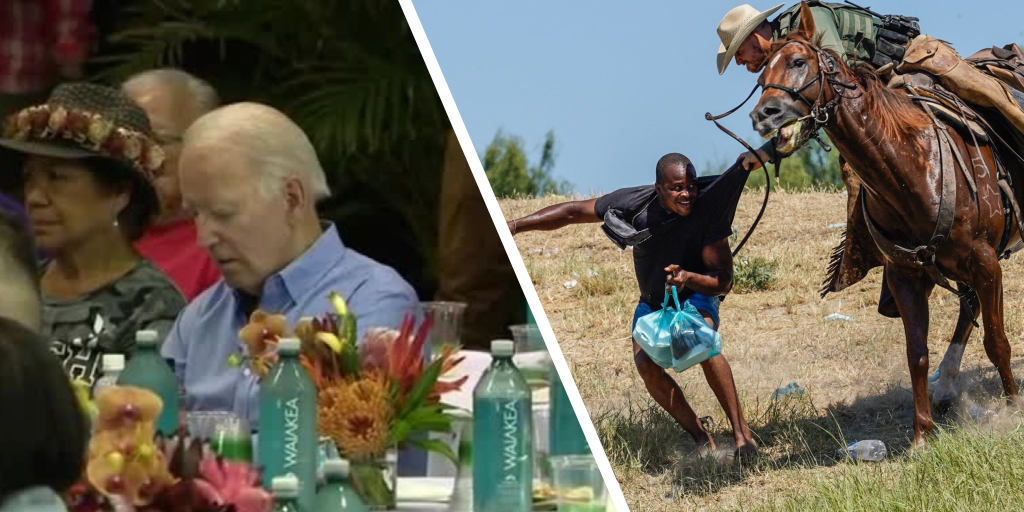
It is clear that regardless of the policies in place, Haitians entering the US suffer the greatest consequences. In 2016, the Department of Homeland Security (DHS) started to partially close off Haitian immigration by detaining Haitians at ports of entry and only releasing them if they showed proof they would be persecuted upon returning to Haiti.21 Then, in 2021, U.S border agents chased Haitian migrants on horseback in their efforts to expel them from their shelter near the Rio Grande under Title 4222. Even with policies like the CHNV parole program, more Haitians are expelled as opposed to migrants from Central American countries.23 We can assume it will be no different with the president’s June 4 decision to suspend entry for migrants seeking asylum at the Southern border who entered the country illegally.
In conjunction with its subjugation of their island, the U.S has viewed Haitians as economic migrants instead of political migrants,24 despite the humanitarian and political crises the country has suffered. It goes without saying that the U.S has no interest in providing safe ways for Haitian refugees fleeing danger; while actions like extending Temporary Protected Status (TPS) and ending deportations could ensure safety temporarily,25 we know this does nothing to secure the future for Haitians as a whole.
The greed of imperialists and Haiti’s ruling class have exacerbated Haiti’s crises and will never implement an effective solution to the gang violence under capitalism. The country’s existing class structure evolved from the colonial caste system, resulting in a handful of wealthy milats exploiting the labor of the majority Black population on the island.26 Almost 60% of Haitians live below the poverty line and have been trapped in a cycle of poverty for generations. To maintain this class structure, Haitian leaders have consistently funded and provided protection for gangs in the country, forcing the masses to live in fear.27 The Haitian working class must secure its own path and continue to reject interventionism from foreign powers. The decentralized and unfortunately short lived Bwa Kale movement of 2023 demonstrated that Haitians can organize effective self-defense for their communities and deal significant damage to the gangs’ power.28 29 Similar movements with a united revolutionary approach could serve as a starting point for the working class and their peasant allies to liberate Haiti. Our own task here is to boycott the upcoming elections and support revolutionary movements in Haiti. Bourgeois elections that lend legitimacy and strength to U.S imperialism will only continue to contribute to Haiti’s destruction and damage the interests of its working class.
- KPBS, Humanitarians urge President Biden to stop Haitian deportations. https://www.kpbs.org/news/border-immigration/2024/04/01/humanitarians-urge-president-biden-to-stop-haitian-deportations ↩︎
- ‘Unconscionable’: US sends dozens to Haiti on deportation flight. https://www.aljazeera.com/news/2024/4/18/unconscionable-us-sends-dozens-to-haiti-on-deportation-flight ↩︎
- Haitian Men Cut Off From Families as U.S. Tightens Entry Rules. https://www.nytimes.com/2016/09/30/world/americas/haiti-united-states-deport-mexico.html ↩︎
- Haiti’s death toll rises as international support lags, UN report says. https://www.reuters.com/world/americas/haitis-death-toll-rises-international-support-lags-un-report-says-2024-04-19/ ↩︎
- HAITI: ONE IN FIVE FAMILIES ON VERGE OF FAMINE IN PORT-AU-PRINCE AS GANG VIOLENCE GRIPS CAPITAL. https://www.savethechildren.net/news/haiti-one-five-families-verge-famine-port-au-prince-gang-violence-grips-capital ↩︎
- Haiti’s leader requests foreign armed forces to quell chaos. https://apnews.com/article/caribbean-united-nations-port-au-prince-haiti-antony-blinken-057bf6462ca2b00fe667e93b5289d319 ↩︎
- Cholera in the Time of MINUSTAH: Experiences of Community Members Affected by Cholera in Haiti. https://www.ncbi.nlm.nih.gov/pmc/articles/PMC9105971/ ↩︎
- Haiti airport reopens after weeks of gang violence. https://www.bbc.com/news/articles/cndd394p7n2o ↩︎
- ‘The Greatest Heist In History’: How Haiti Was Forced To Pay Reparations For Freedom. https://www.npr.org/sections/money/2021/10/05/1042518732/-the-greatest-heist-in-history-how-haiti-was-forced-to-pay-reparations-for-freed ↩︎
- Valuing race? Stretched Marxism and the logic of imperialism. https://law.unimelb.edu.au/__data/assets/pdf_file/0007/2356018/Knox,-Valuing-Race-Stretched-Marxism-and-the-logic-of-imperialism.pdf ↩︎
- Banking on a ‘shithole’: US-led racial capitalism in Haiti began long before Trump. https://blogs.lse.ac.uk/latamcaribbean/2018/04/12/banking-on-a-shithole-us-led-racial-capitalism-in-haiti-began-long-before-trump/ ↩︎
- Ibid. ↩︎
- Dominican Republic expels 1,800 children to Haiti: UNICEF. https://apnews.com/article/caribbean-united-states-immigration-haiti-dominican-republic-a12c81eece07785de285548cf06ab7f1 ↩︎
- What’s next for a crackdown on Haitian migrants as the Dominican Republic leader enters a new term?. https://apnews.com/article/dominican-republic-abinader-haiti-migration-border-b9d6663a82e9664ced7623faa234ba77 ↩︎
- Ibid. ↩︎
- Why are Kenyan forces set to intervene in Haiti and how is the US involved?. https://www.aljazeera.com/news/2024/5/22/why-are-kenyan-forces-set-to-intervene-in-haiti-and-how-is-the-us-involved ↩︎
- Ibid. ↩︎
- New imperialist intervention in Haiti approved by UN Security Council. https://redherald.org/2023/10/05/new-imperialist-intervention-in-haiti-approved-by-un-security-council/ ↩︎
- Ibid. ↩︎
- The Biden Administration’s Humanitarian Parole Program for Cubans, Haitians, Nicaraguans, and Venezuelans: An Overview. https://www.americanimmigrationcouncil.org/research/biden-administration%E2%80%99s-humanitarian-parole-program-cubans-haitians-nicaraguans-and ↩︎
- At The U.S.-Mexico Border, Haitians Arrive To A Harsh Reception. https://www.npr.org/sections/parallels/2016/11/23/503043709/haitians-hoping-to-migrate-to-u-s-find-the-reception-harsh ↩︎
- Haiti Isn’t Cursed. It Is Exploited. https://www.essence.com/news/haiti-isnt-cursed-it-is-exploited/ ↩︎
- Why some Haitian boat refugees are allowed into the U.S. and others are sent back. https://www.miamiherald.com/news/nation-world/world/americas/haiti/article264338276.html ↩︎
- U.S. policy on Haitians, Cubans differs. https://edition.cnn.com/2002/LAW/10/30/immigration.rules/ ↩︎
- Over 450 Organizations Urge the Biden Administration to Extend TPS for Haiti. https://www.hrw.org/news/2024/03/27/over-450-organizations-urge-biden-administration-extend-tps-haiti ↩︎
- Social Class in Haiti. https://thriveansanm.org/blog_posts/social-class-in-haiti/ ↩︎
- Why is Haiti so chaotic? Leaders used street gangs to gain power. Then the gangs got stronger. https://apnews.com/article/haiti-gangs-violence-142c57f868c5f8b0cdf01627b3f5350b ↩︎
- In Haiti, a grassroots vigilante movement is fighting back against gang warfare. https://www.cbc.ca/news/politics/haiti-bwa-kale-port-au-prince-gang-warfare-1.6833758 ↩︎
- Class Structure and Class Conflict in Haitian Society. http://www.jstor.org/stable/2574763?origin=JSTOR-pdf ↩︎
 Crusader News
Leave a comment