


by Malekee Beals
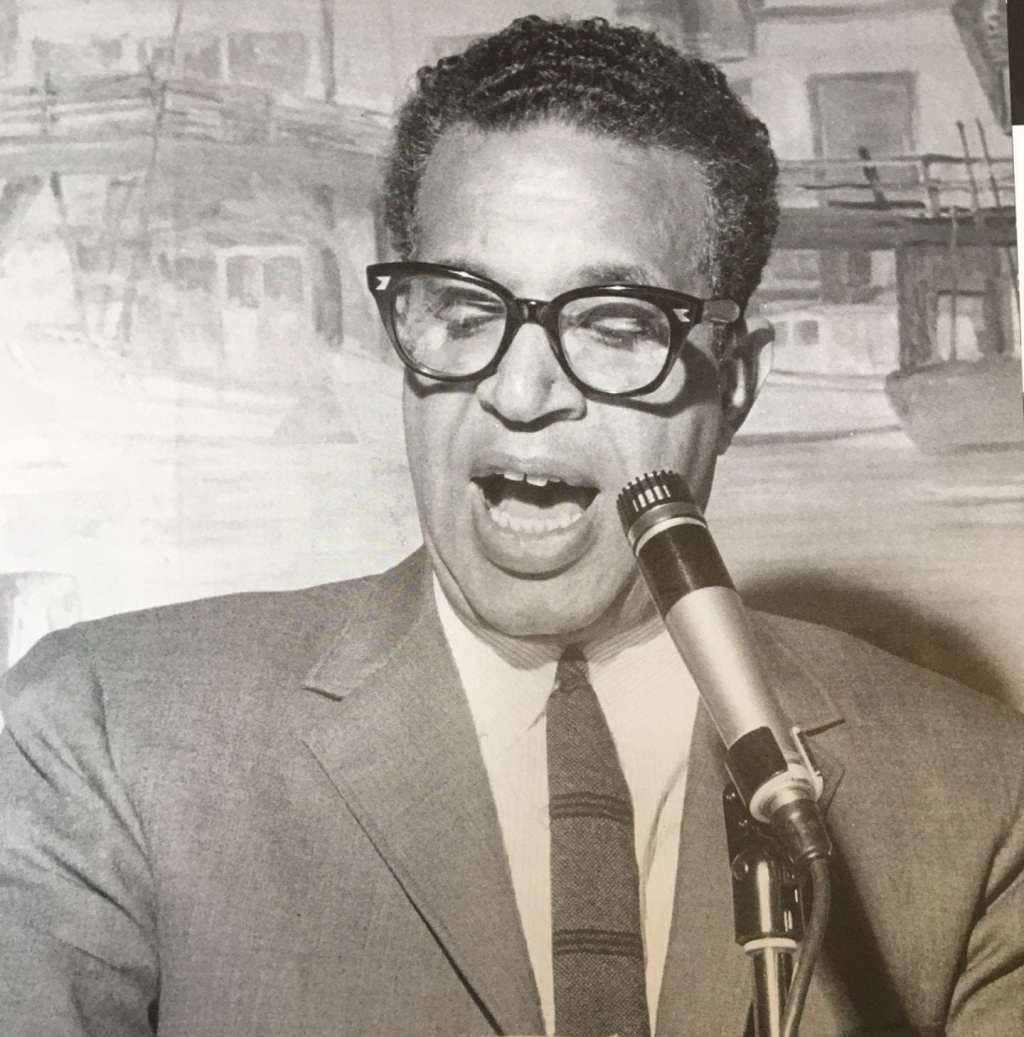
The Pacific Northwest of North America is not known for its Black population, let alone Black activists unfortunately. But the Pacific Northwest has a rich history of Black participation in revolutionary movements that sought to transform society for the better, and for the majority of people – the working class. From Revels Cayton to Aaron Dixon to Mark Cook, this region, like all others has produced magnificent fighters for the working class and Black people as a whole. This article serves to highlight Revels Cayton (1907-1995), Revels was born in Seattle into a family of prominent Black petit-bourgeois Republicans. Revels’ father was the son of an enslaved black man and a white plantation owner’s daughter, born into slavery on a plantation in Mississippi in 1859. Revels’ mother; Susie was the daughter of the first Black senator: Hiram Revels. Revels’ father was also an advocate for Black American rights, and founded multiple Republican newspapers in Seattle. The Cayton family had the struggle for equality at the forefront of their minds due to their background. They also lived in the wealthiest area of Seattle at the time, Capitol Hill (to modern Seattle residents this is a shock). The majority of Black people in Seattle at the time lived in Seattle’s ‘Central District’, the Central District is historically a very Black neighborhood, up until recently due to recent gentrification.
Eventually, the family was kicked out of this wealthy neighborhood due to a restrictive racial covenant, restrictive covenants were agreements signed by property owners, real estate boards, and neighborhood association that would ban Black people from buying, leasing, or even occupying a piece of property. Sometimes these covenants also restricted Latino and Asian people from buying property. In 1948 the Shelley v Kraemer supreme court case officially ended the practice of racially restrictive covenants but property owners were still allowed to include them as ‘warnings’. Even though you couldn’t legally turn someone away from the property due to their race it still happened, in 1968 it became completely illegal to even have a racially restrictive covenant. However, the practice still impacts where Black people live to this day, since Black people were excluded from so many properties and places, segregation still remains the reality in many places despite it being outlawed simply because Black people have been purposefully pushed into poverty by the US government. Over 60,000 restricted properties in the Puget Sound have been identified (so far) with 44,000 in King County (most populated county in Washington, where Seattle is and where Revels lived).
Financial troubles began burdening the Cayton family after they were forced to shut down the Seattle Republican, their newspaper in 1913. They began moving around throughout Seattle and Revels attended Garfield High School during his childhood. Revels was forced to work at a young age due to their financial woes, at the age of 15 he worked at the Seattle waterfront as a telephone operator and waiter, he did grueling labor for up to 16 hours a day for very little pay. During his work at the docks he joined a Black maritime worker association, this is where he gained his first experience in worker organizing. Revels was introduced to socialism by a member of the Industrial Workers of the World (IWW) whilst recovering from an extremely harsh case of ‘sleeping disease’. To quote Revels:
“by the time I got off that porch [where he spent hours talking politics while recovering from his illness]…I was a socialist. I found it…reasonable and sensible…that the only way that Blacks were going to get free would be in conjunction with the working class…”
Revels began reading socialist theory and after he graduated High School in 1929 (he graduated later due to working and his illness), Revels had poor grades during High School and was drawn to the waterfront where he would be amongst the workers listening to their grievances, all he needed was an organization to join. Revels listened in on classes at the University of Washington and at the campus he was introduced to the Young Communist League (YCL). After the 1928 Comintern resolution on the Negro Question the CPUSA’s in Washington state began putting more of an emphasis on developing the struggles of Black people and Filipinos against discrimination and racist Jim Crow laws.
In 1930, Revels mother; Susie, began supporting the Communist movement. Susie had always been an activist and wanted to see equality be brought about, she was inspired by her religous beliefs, saying god told her to help those who are impoverished and less fortunate, she was an activist throughout her entire life, fighting for the rights of women and children. Her adoption of Communist beliefs came at a time when Revels was just becoming involved and the Great Depression was in full swing. She broke with her husband’s established political reputation as a stalwart Republican to pursue Communist politics. Susie became well known amongst Black Communists, with Paul Robeson paying a visit to her whilst he was on tour, and Langston Hughes also visiting her and dedicating a poem to her titled “Dear Mr. President”. Susie remained a Communist supporter until her death in 1943.
Revels formed the first organization in Seattle dedicated to supporting the cause of the Scottsboro boys, the Scottsboro boys were 9 Black teenagers in Alabama who were falsely accused of raping two White women in 1931. An all-white jury convicted the Scottsboro boys of rape and sentenced them to death. The Scottsboro boys lacked proper legal defense during this trial as well. This case sparked massive condemnation around the country due to its obvious sham-trial. of Revels became involved with the International Labor Defense (ILD), the legal defense organization of the Communist Party of the USA (CPUSA), the ILD were the ones defending the Scottsboro boys, the ILD was the only organization standing up for the legal rights of Black people in court, organizations like the National Association for the Advancement of Colored People (NAACP) refused to send a lawyer to aid the Scottsboro boys and they believed the families of the 9 teenagers were simply swindled by the ILD since according to the NAACP’s leader, Walter White: “[the families were] of humble background and with meager educational and other advantage.”
Revels played a crucial role in organizing for the Scottsboro boys within the Pacific Northwest, Revels met the families of Scottsboro boys and helped them host numerous speaking tours throughout the region. Revels’ work with the ILD led him to join the CPUSA in early 1934, he also became the district secretary of the ILD in the Pacific Northwest. Revels’ also organized people around another case involving a Black man being falsely accused of a heinous crime: the case of Oregon resident Ted Jordan, Jordan was convicted of murder by an all-white jury and sentenced to death. During the first trial Jordan lacked proper legal representation, the NAACP secured a re-trial for him but the ILD led by Revels’ stepped in and were able to prevent him from being executed, however he remained in prison until 1960, after 26 years of being falsely imprisoned.
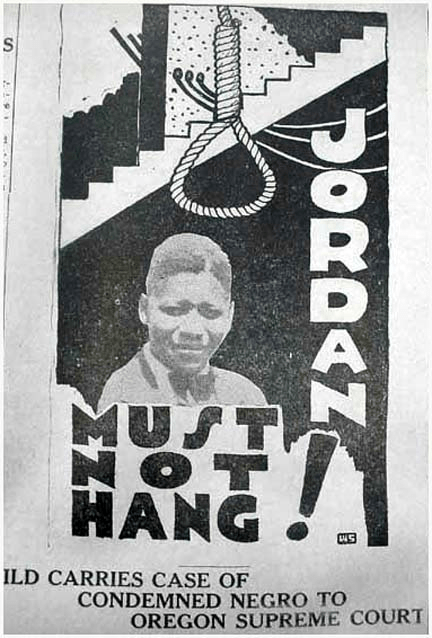
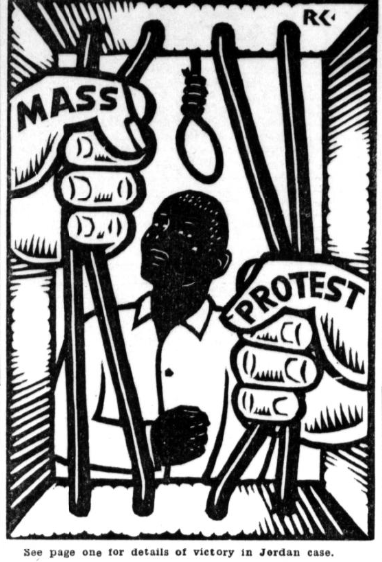
This racist trial remains an unknown chapter in Oregon’s history, in modern times people associate Oregon and the Pacific Northwest as a whole with progressivism, but the reality was always more complicated. The Pacific Northwest was a massive hotbed for socialist organizing but simultaneously a region extremely impacted by systemic racism. Oregon as a territory actually refused to allow Black settlers, this law actually stated that if any Blacks entered the territory they would be publicly whipped 39 times. Eventually this law was changed to forced labor, then later on when Oregon became a state the constitution of Oregon included a clause that banned non-Whites from entering the state. Although this clause was rarely enforced, it wasn’t removed until 2002.
Washington was no stranger to this poignant stench of racism either, in 1934 Revels’ visited the small Eastern Washington mining town of Roslyn, with a British couple from Oxford who traveled to America to study worker conditions. At the time there was a large miners strike going on in Roslyn, with a multiracial union leading the struggle. Revels met with these striking miners, and in describing the atmosphere he said:
“the air was electric. The solidarity of the miners, their wives, permeated me. The viciousness of their situation. Their hope and determination”
Revels was arrested for being a known Communist “agitator” in Roslyn and was held in jail and interrogated by the local police while an armed White mob stood outside waiting for him to be released so they could lynch him. Revels was only freed without harm due to the pressure put on the local police by the British couple he was travelling to Roslyn with. It was not uncommon for police around the country to release political prisoners to a mob ready to murder them, Revels barely escaped with his life.
In 1934 Cayton ran as a Communist for the Seattle City Council. Voice of Action, a Communist newspaper in Seattle described Cayton as the following:
“Revels Cayton, the youngest candidate running for office, is 24 years old. He was born and reared in the city of Seattle , a graduate of Garfield high, played on their baseball and football teams. Cayton is a Negro worker and a symbol in this campaign of the unity of all workers regardless of race, creed or color. He went to sea nine years ago. Later he became a dishwasher, waiter, bellhop, cook and steward. He joined the Young Communist League and the Marine Workers Industrial Union years ago. At present he is district secretary of the International Labor Defense.”
During the early 1930s the CPUSA put a special emphasis on the struggles of Black people against the discrimination and racism we face. This emphasis came from years of internal struggle over how to properly approach the struggle for civil rights, in 1928 the CPUSA had fewer than 50 Black members and had failed to organize a single Black labor union. The failure of the CPUSA to recruit Black people resulted in the Comintern (the international Communist association at the time) to intervene and help the American Communists improve their understanding on the oppression Black people face and how to organize them to fight against this oppression. With the Comintern’s help the CPUSA came to the understanding that Black people in the US constituted a nation separate from the American nation, and that special emphasis must be placed upon the struggle of Black people by the American Communists, and White chauvinism towards Black people must be combated so as to unite both White and Black workers to fight for socialist revolution. This may seem like an obvious opinion to us but this understanding was built off of years of internal struggle against wrong ideas in the CPUSA, and even in the present day many so-called “communists” deny the necessity of cross-racial unity to achieve socialist revolution.
Revels’ stepped away from leading the Pacific Northwest ILD in 1934 to help form and lead another organization – the League of Struggle for Negro Rights (LSNR). The LSNR was a CPUSA tied mass organization dedicated to fighting for the rights of Black people. The LSNR rallied white workers and Black people to fight for workers and to struggle against racism and discrimination. For example, the LSNR led by Revels held demonstrations against racist practices in Seattle, with an emphasis on having workers participate in these demonstrations. The LSNR was instrumental in fighting against segregated businesses, they would protest against racist businesses and march throughout Seattle, removing signs from businesses that said “Whites Only”. This cross-racial unity promoted by the CPUSA was a shocking display in America, as many unions still refused to have Black members and capitalists would often times use Black workers to break strikes so as to fan the fires of race hatred amongst the workers in order to divide them further. The Communist led struggle for racial equality continued into 1935, when King County representative Dorian Todd introduced a bill to the state legislature that would have banned mixed-race marriage and mixed race sexual relations, this bill was proposed in reaction to a White woman marrying a Filipino man. Interestingly enough, this bill also considered Eastern European people as not White. From 1935-1937, Communists in Washington State successfully struggled against and eventually defeated the Todd Bill, Communists correctly identified this bill as an attempt to sow race hatred and division amongst the working class. Communists formed a broad front of opposition to this bill with Revels’ father being chosen as the spokesperson for this group due to his veteran political status and high standing in the Black Community. This broad front included people from, but not limited to: Communists, liberals, progressives, church leaders, Japanese-Americans, Chinese-Americans, the NAACP (surprisingly), labor leaders, and more. Revels says this about the effort to stop the bill in Voice of Action:
“They were even more surprised-when the Voice of Action called upon the broad masses of white workers throughout the Northwest to fight the bill and as a result telegrams began to pour in from unemployed organizations, United Farmers Leagues, trade unions, Commonwealth Builders (Commonwealth Builder meaning members of a Communist Party led United Front organization in Washington), leading white liberals, prominent educators, and professional men. They had not planned to find, the Negro people themselves united, and in addition, united with thousands of white workers And liberals and prepared to put up a militant fight to kill the bill. In the face of such solidarity and, aroused public indignation, they did not dare to go through with their plan. Communists Lead Fight The mistake these fine gentlemen made was in forgetting the Communist Party. Maybe they thought that. We Communists just talk of defending the rights of the Negro people in order to catch votes, like they do. If that was their idea, they certainly know better now.”
This excerpt in particular is poignant, because Bourgeois scholars attempt to say Revels abandoned Communism entirely since it “was only interested in talking about race when that issue applied to Party strategy.” This is an entirely false opinion, as genuine Communists (such as those in the early 1930s in Washington State) understand that racial oppression cannot be solved under capitalism, the two are joined at the hip together.
Revels life would change forever in May of 1934. Revels was always drawn to the waterfront and organizing the workers there (called Longshoremen), he always wanted to go to where the working masses toiled and in the Pacific Northwest many of them were based around the growing shipping industry. In 1934 a massive Longshoremen strike began on the West Coast, particularly centered in San Francisco. Revels went to the San Francisco waterfront to among the workers and help organize them. This is where he stayed for the rest of his life.
He joined the Marine Cooks and Stewards Union’s head office during the strike and participated heavily in it. He later joined the International Longshore and Warehouse Union (ILWU), the ILWU was ran by Communists for a time during the 1930s, and due to its association with Communists, the Congress of Industrial Unions (CIO, one of the largest trade unions in America) kicked the ILWU out in 1950. Ironically; Revels was the vice president of the CIO in California in the 1940s.
The shift of the CPUSA to focusing organizing efforts from creating Communist led unions that aren’t tied down by Federal government regulations and corporate interests to organizing solely within pre-existing capitalist unions reflects the rise of revisionism in the CPUSA. In the mid-1930s revisionists led by Earl Browder and William Z. Foster consolidated control and began purging genuine Communists from the party, this also led to the liquidation of the LSNR in 1935. The LSNR was completely replaced by the National Negro Congress (NNC), which was a united front organization designed to appeal to non Communist Black organizations like churches, the NAACP, and Marcus Garvey Black nationalists. The formation of the NNC was not inherently bad, but was the LSNR was liquidated and replaced with a much less radical organization. There was no organization left for Black communists to organize working class Black communities behind. The LSNR being liquidated also coincided with the CPUSA abandoning the belief that the Black nation existed, and needed self-determination.
Revels became the director of the NNC in 1943, and he seemingly was unable to determine how revisionism had corroded the parties beliefs in all spheres, but especially in reference to the struggle of Black people. Eventually Revels stopped attending Communist Party meetings in 1952, but still remained active in local progressive politics, and was still a supporter of the CPUSA’s ideals. Unfortunately later in life Revels slumped further down the revisionist slide, and shifted towards only doing electoral work in San Francisco, he became the Deputy for Social Programs in 1964 and eventually retired in 1972.
The life of Revels paints a great picture of how the CPUSA during its hayday properly organized nationally oppressed people for socialist revolution, whilst also paying special attention to combating White chauvinism. Especially in a region that is extremely White, like the Pacific Northwest. Revels’ story also serves as a stark warning sign, that revisionism should be properly recognized and combated as the corrosive it is. The Pacific Northwest is not known for its Black population, let alone its Black population fighting back against the racism we experience, Revels early life serves as an inspiration and warning sign to Black Communists in the United States to this day.
 Crusader News
Leave a comment